A person notices it first in moments of pressure – the chest tightens, the breath rises, and thought becomes mechanical. This is where conscious breathing spiritual practice stops being a theory and becomes a weapon for awakening. Breath reveals our state, but more than that, it can be used deliberately to recollect attention, soften identification, and prepare the mind and heart for inner work.
Many people approach breathing as a wellness technique. That has value, but it is incomplete. In a serious school of inner development, breathing is not only for relaxation. It is used to gather dispersed energies, become present in the body, observe the movement of the ego, and create the interior conditions for prayer, meditation, and comprehension. If we breathe consciously yet continue living in distraction, resentment, vanity, and mechanical reaction, the practice remains shallow. If we unite conscious breathing with self-observation and ethical transformation, it becomes part of a path.
What conscious breathing spiritual practice really means
Conscious breathing spiritual practice means breathing with attention, intention, and remembrance of the inner aim. The emphasis is not merely on changing the rhythm of the lungs. The emphasis is on changing the quality of consciousness present in the act.
A mechanical breath belongs to a mechanical life. We rush, react, fantasize, and forget ourselves. The breath follows that disorder. A conscious breath interrupts it. For a moment, attention returns to the organism, to sensation, to the fact of being here. That small act can become the doorway to something much greater: the observation of thought, the calming of emotion, and the possibility of acting instead of merely reacting.
In esoteric work, this matters because sleep of consciousness is not abstract. It appears in arguments, impulses, impatience, pride, fear, and internal chatter. The breath can help us detect these states early. It does not dissolve the ego by itself, but it gives us a practical means to stop feeding it mechanically.
Why breath matters in inner transformation
Breath is one of the few processes that is both automatic and voluntary. That makes it especially useful for spiritual training. Through it, we can enter a more collected state without withdrawing from daily life.
This is important for those who seek transformation while still working, raising children, serving a family, and meeting obligations. A practice that only functions in a retreat room has limited reach. Conscious breathing can be done before speaking, while walking to a meeting, during emotional disturbance, before sleep, and at the start of meditation. It brings doctrine into ordinary moments.
There is also a moral dimension. When a person breathes consciously in the middle of irritation, they create a brief interval between stimulus and response. In that interval, they may remember charity instead of anger, humility instead of self-importance, restraint instead of verbal violence. Breath does not replace conscience, but it can help conscience become active.
The right way to begin a conscious breathing spiritual practice
The beginner often makes one of two mistakes. Either they breathe so casually that nothing changes, or they force the breath and create agitation. The middle path is attentive, steady, and natural.
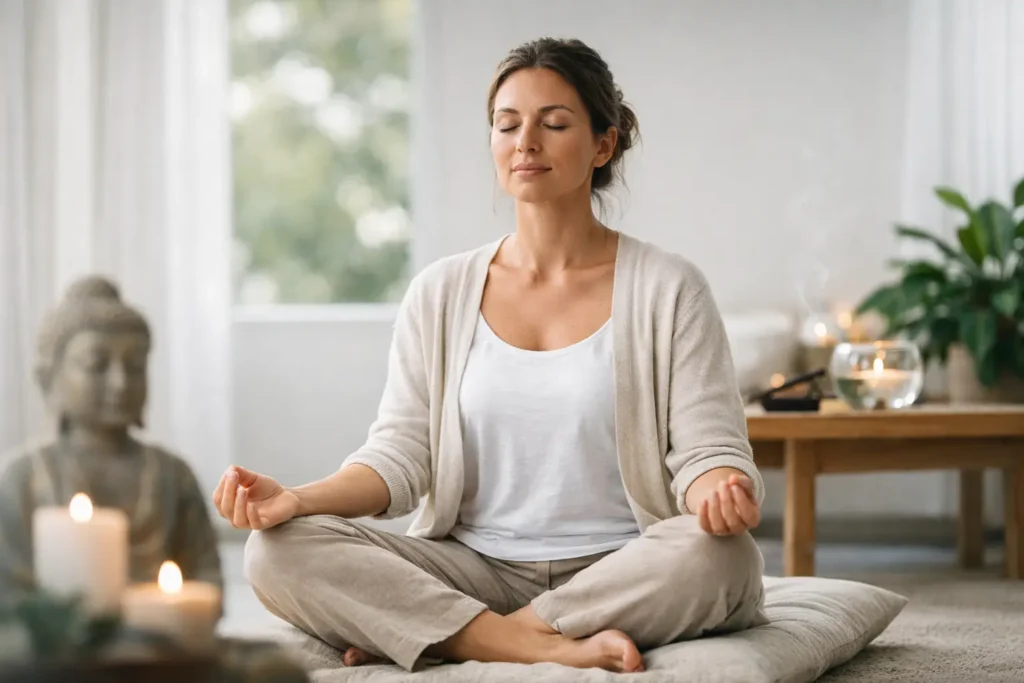
Start by sitting with the spine comfortably upright. Let the body be alert without rigidity. Bring attention to the natural movement of inhalation and exhalation. Do not try to achieve a mystical state. First learn to observe.
Then deepen the breath slightly through the nose. Feel the air enter, the chest and abdomen respond, and the exhalation release. Count if it helps maintain attention, but do not become dependent on counting forever. The purpose is recollection, not mechanical control.
At this stage, add a second element: self-observation. What is the mind doing? Is there anxiety, fantasy, irritation, hurry, or heaviness? Do not justify or condemn what appears. See it. Breathing consciously while observing inwardly begins to unite two essential disciplines: presence and knowledge of self.
A practical framework for daily use
A disciplined practitioner benefits from structure. One useful framework is to work with conscious breathing in three daily moments.
1. Morning recollection
Upon waking, before reaching for a phone or entering the day mentally, take a few minutes to breathe consciously. Feel the body, remember your spiritual purpose, and ask inwardly for guidance. This sets a direction. Otherwise, the day usually begins in dispersion.
2. Intervals during activity
Several times a day, pause for three to five conscious breaths. At work, before entering the home, before answering a difficult message, or before eating, recollect yourself. These short intervals prevent total forgetfulness. They are small, but if repeated faithfully, they begin to change one’s inner climate.
3. Preparation for meditation and sleep
Before seated meditation, conscious breathing helps gather scattered attention. Before sleep, it helps release the coarseness accumulated through the day and prepares the psyche for more intentional rest, prayer, and dream work.
This framework is simple, but simplicity should not be confused with weakness. A small practice, repeated every day with sincerity, often produces more real change than dramatic efforts done sporadically.
Conscious breathing in meditation, prayer, and self-observation
Breathing can serve different functions depending on the practice. In meditation, it helps stabilize attention so that deeper observation becomes possible. Without some initial recollection, meditation easily collapses into wandering thought.
In prayer, conscious breathing can quiet emotional turbulence and make devotion more sincere. A rushed prayer often remains in the intellect. A recollected breath can help the heart participate. The person becomes less fragmented.
In self-observation, breath is especially useful when strong emotions arise. Suppose jealousy, wounded pride, or anger appears. The ordinary tendency is to become that emotion. Conscious breathing creates a degree of separation. Not complete liberation, but enough to witness the state instead of drowning in it. This witness position is essential for later comprehension.
Still, one must be honest: breathing alone does not grant illumination. It prepares the field. Real inner transformation requires ongoing observation, understanding of one’s defects, sincere repentance, and practical change in conduct.
Common errors that weaken the practice
One error is reducing the practice to stress management. Calmness has value, but spiritual work seeks more than comfort. Sometimes conscious breathing brings peace. At other times, it exposes restlessness that was already there. Both outcomes are useful if approached with seriousness.
Another error is seeking immediate extraordinary experiences. The breath can refine perception, but if practiced with ambition or spiritual vanity, it easily becomes another form of ego nourishment. The aim is awakening, not self-image.
A third error is separating the exercise from daily conduct. A person may breathe consciously in the morning and then spend the afternoon gossiping, lying, or indulging resentment. This contradiction weakens the force of practice. Breath should support a transformed way of living.
Finally, some people become overly technical. Ratios, retention, and advanced methods have their place, but many seekers need first to establish sincerity, regularity, and self-observation. Technique without conscience can become sterile.
When the practice deepens
With time, conscious breathing may become less like an isolated exercise and more like a thread woven through the day. The practitioner starts noticing how breath changes with fear, desire, haste, and irritation. This is valuable knowledge. The body begins to reveal the psychology.
At a deeper stage, breathing becomes an ally in remembrance of self and remembrance of the Divine. It helps one return inwardly while still fulfilling outer duties. This does not mean living in passivity. It means acting with more center, more clarity, and less inner dispersion.
For those who want a structured path rather than disconnected tips, QS Universal Knowledge teaches these principles within a broader framework of meditation, self-observation, dream work, and the practical transformation of daily life. That wider context matters because breath finds its true place when integrated into a complete spiritual discipline.
The most fruitful way to approach this work is with patience and reverence. Take one conscious breath before speaking harshly. Take another before beginning meditation. Take another when vanity, fear, or sadness starts to take control. If that breath is joined to sincere self-observation, it can become the beginning of a new kind of life.